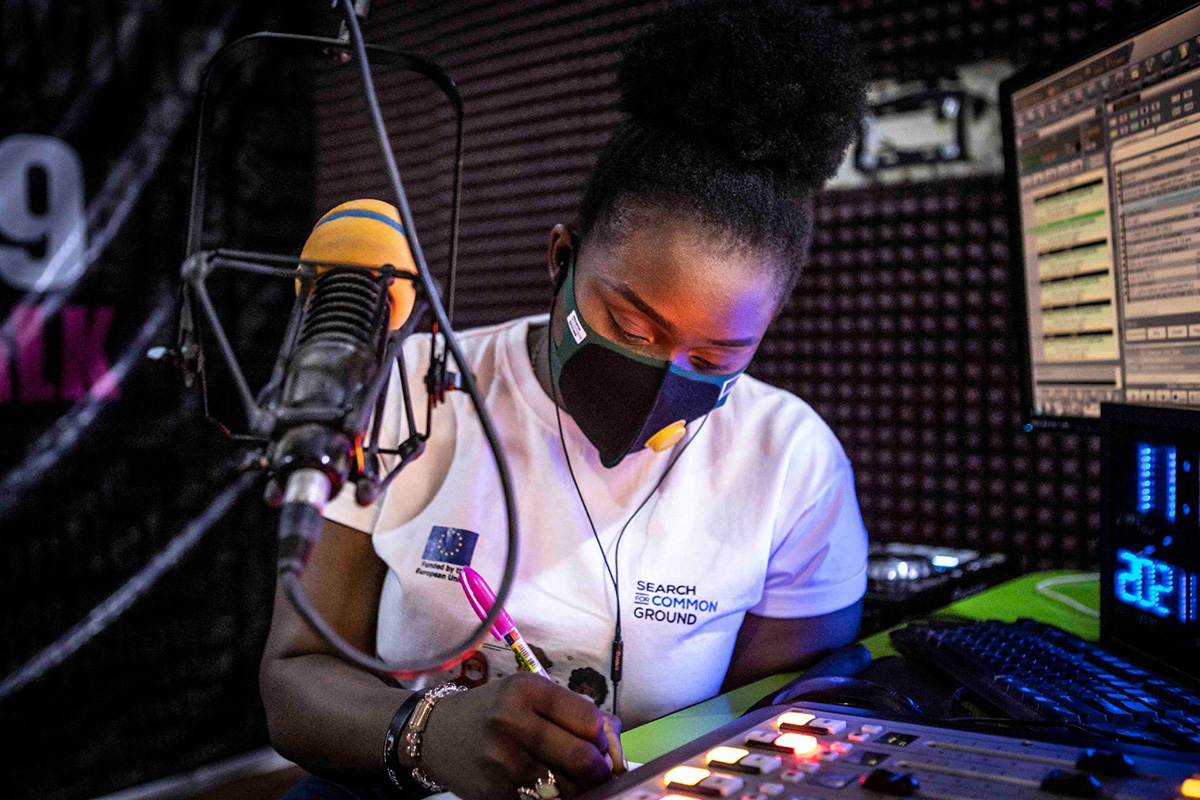
SANDRA
“We invited an imam and a pastor to share their views on the virus.”
"There were already so many radio programs on COVID-19. We had to stand out," says Sandra, producer of one of our radio partners in Plateau State, Nigeria.
The health crisis highlighted the importance of radio in disseminating vital information to even the most remote communities. The European Union-funded radio talk show Working Together Against Corona simultaneously fights the spread of the virus and misinformation while bringing people together. On Jay FM 101.9 radio, Sandra provides verified information, covers the many challenges brought on by the pandemic, and engages citizens in live discussions to "give them concrete answers to their concerns."
Moreover, in a region still plagued by divisions along ethnic and religious lines, the program offers new avenues for dialogue. Indeed, this global health crisis provided a fertile ground for strengthening ties around a common cause. "We invited an imam and a pastor to share their views on the virus. They urged their respective congregations to see it as their common enemy, and work together for the good of all."
Today, outside the city's places of worship, everyone will wash their hands, regardless of religion. And "people of all faiths are calling out to each other on the street to make sure everyone is following the preventive measures,"looking out for each other.
In the studio, other guests such as frontline workers, scientists, and doctors join Sandra in guiding listeners through the complexities of the pandemic, hammering preventive measures and collaboration to address it. "We gave people the do's and don'ts to protect themselves and others."
But producing a radio show is also about connecting with communities, listening to them, taking their pulse. With a recorder in hand, Sandra walks the streets of the city of Jos, strolls through the markets, and collects citizens' opinions. "I capture what they think about the disease, their beliefs, and misconceptions."
Back in the studio, she assembles these voices into a short audio clip to broadcast live on the show. This patchwork of voices enables hosts and guests to get to the heart of what matters to communities. Then, on-air, citizens participate in the debate, getting more information, sharing their experiences, their struggles.
"The biggest challenge was that people didn't believe COVID-19 was real”, and refused to adopt preventative measures to curb the transmission. In Nigeria, depending on the source, the information is received with varying degrees of confidence. Indeed, this denial, Sandra attributes primarily to a trust deficit. "The government was the first to release the information. People were doubtful." That's where radio’s support for response efforts comes in.
Trusted friends to families and communities, presenters are also people with whom listeners connect emotionally. "They belong to those same communities. People find it easier to relate to them." Radio, an intimate, familiar, interactive space endowed with its own identity. But most importantly, a preferred and affordable medium for vulnerable communities. "Due to the many power outages in the area, radio stays the most accessible platform for the majority of people to get credible information."
Until we are all safe, no one is. So Sandra continues using radio as a tool for connection and healing, producing programs that give everyone a voice, and helps people walk the difficult path from rumor to fact, from division to collaboration.