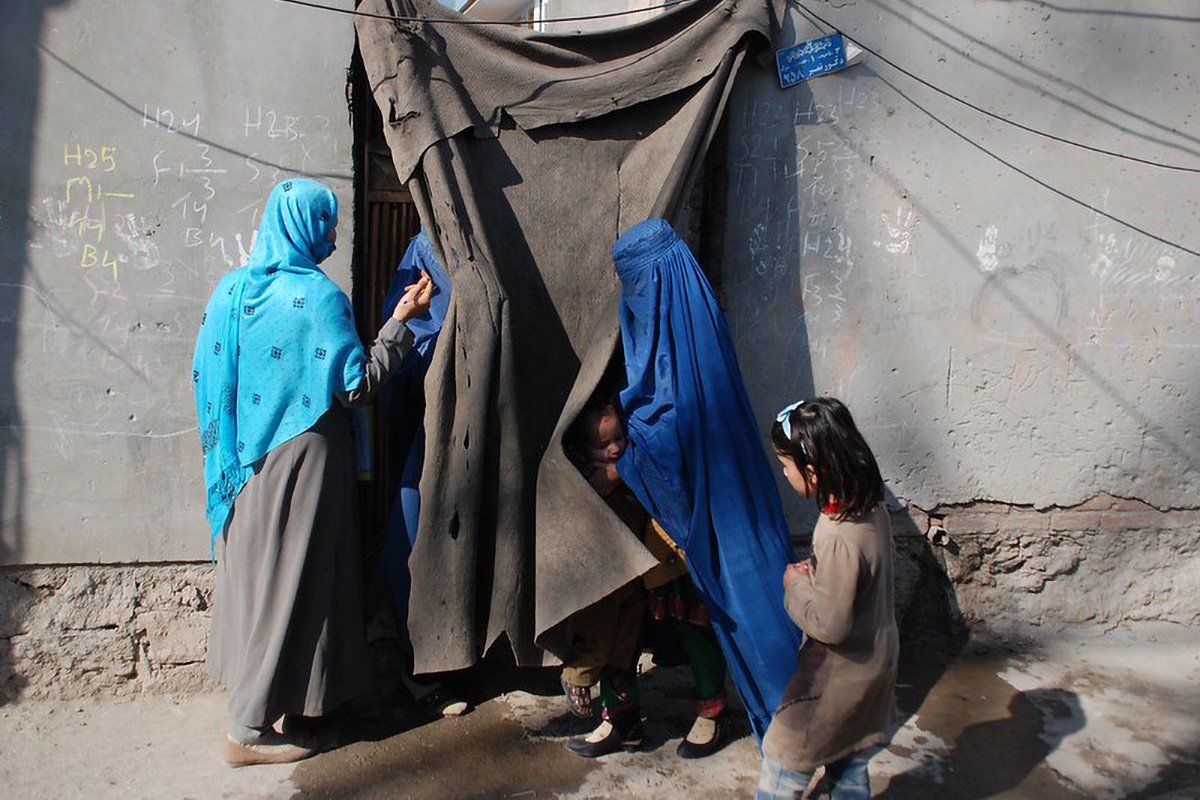
“The strength of Afghan women was not broken.”
I will always remember the first few weeks of Kabul under the Taliban rule; the frenzy of thousands of human bodies, tightly packed against each other, hoping for a small chance to leave Afghanistan.
That frenzy has largely died now. I am no longer getting calls from loved ones, asking me to help them decide whether they should take the risk to stay — or the even bigger risk to try to leave. Those who could go are gone. Most couldn’t. Others decided to stay.
Many other Afghans, like me, are looking for a way back into our home country.
As an Afghan woman and the Afghanistan Director for Search for Common Ground, I have two questions in mind: how do I return to Afghanistan safely to continue my work? And, how can I help ensure that the Afghans who stayed can live in a safe, healthy, and just Afghanistan?
I am a peacebuilder, and I believe that dialogue between all parties is the key to building a better Afghanistan. The international community must engage the Taliban, and the Taliban must engage the full diversity of Afghan society, as well as global actors. Now is a time to lean forward, not pull back.
The isolation of the Taliban, the key decision-makers in Afghanistan, is devastating ordinary people. The restrictive measures we see today are not a victory against the Taliban, but a defeat of the Afghan people. Over a million Afghans employed by the state have not received their salaries for the last four months — with tragic consequences for single-income families. Cash is scarce, and people cannot access their savings. The market for high-value items like land, cars, and gold has crashed, so people cannot sell those to survive. The cost of living has more than doubled. Local NGOs that protected human rights are no longer able to operate because of restrictions decided by policymakers in DC and Brussels.
The proponents of sanctions on the Taliban claim that these measures will ensure their flexibility on certain issues, such as giving women their basic rights. This aid conditionality, where the international community barters for the rights of all Afghans with the Taliban, reduces the agency of our own people. I do not want to see the international community representing our interests in talks with the Taliban; I want us to be part of that conversation, with the Taliban and the international community.
I have lived under Taliban rule. Have they changed and can we trust them are two questions I am faced with every day. Compared to the 90s, their day-to-day interactions with ordinary people are a bit different. They’ve opened up some education and employment opportunities for women and girls, and so far they have not committed mass atrocities against those that fought against them. These changes must be sustained through peacebuilding and the empowerment of the Afghan people so that they can hold the Taliban accountable.Women, men, and young people need the right skills and platforms to negotiate with the Taliban their own access to basic rights and freedoms, rather than waiting for the international community to do it in capitals thousands of kilometers away from Afghanistan. Agreements reached between the Taliban and local people based on common ground can create an important bedrock of trust and accountability. That’s why peacebuilding, here and now, is so important.
As the horror of Kabul airport is still fresh, many ask me if the Afghan people are ready and willing to talk with the Taliban.
Afghan women have always led the struggles against those that have limited their rights and freedoms.During the last Taliban rule, it was unafraid Afghan women that ensured a whole generation of children were educated at home as schools were closed down. The same women are talking with the Taliban on media, leading conversations on girls’ education in Herat and Kabul, speaking about humanitarian action in Balkh. Afghan men are also making their voices heard.
It’s time that we look for clues about what Afghan people want on the placards that they are holding in the streets. It’s time that the international community meaningfully engaged with these voices. More importantly, it’s essential that we support peacebuilding and the pursuit of common ground led by indigenous leaders, instead of sanctions that will choke my country.
I am an Afghan woman born and raised in war who has tasted the freedom of peace. I do not see isolation or military action as viable options for my country. Dialogue with the Taliban where Afghan people are centered is the only way ahead towards sustainable peace and prosperity.