“I no longer felt like I was left behind.”
"First, they attacked the schools," Abba says. The noose tightened slowly, surely. Then, "Boko Haram attacked my community," he recounts, leaning forward, the words coming out as a long-overdue flood.
In northeastern Nigeria, landscapes carrying memories of laughter, joy, and dreams turned into warscapes in the blink of an eye. "We ran," Abba continues. Along the way, he saw glimpses of what had just been shattered: families, houses, children playing. Then a halt. "We reached another community." Safety. Normality. Familiarity.
But not for them.
"People didn't know me. They didn't trust me and I was soon arrested." In a climate of permanent fear, where the extremist group often recruits children, no one is spared from suspicions. At the age of 12, Abba was placed in the Giwa military barracks, the main detention center in Borno State. Once again, Boko Haram struck. "They raided the barracks. Everyone escaped." With his heart throbbing, Abba resumed his run for survival.
"I didn't know where my parents were, but I managed to find my old village. People helped me contact them to come and get me." During the family's journey, the convoy passed over an explosive device placed by the group. Abba's uncle died on the spot; his father was seriously injured.
More misfortune struck when authorities called the escapees to surrender, and Abba returned to detention. "I was released after two years. That's when I learned that my father had succumbed to his injuries." Back home, Abba regretted the missed years, feeling as if time had stood still for him. "Life went on for my friends. They had graduated, and I was back at square one."
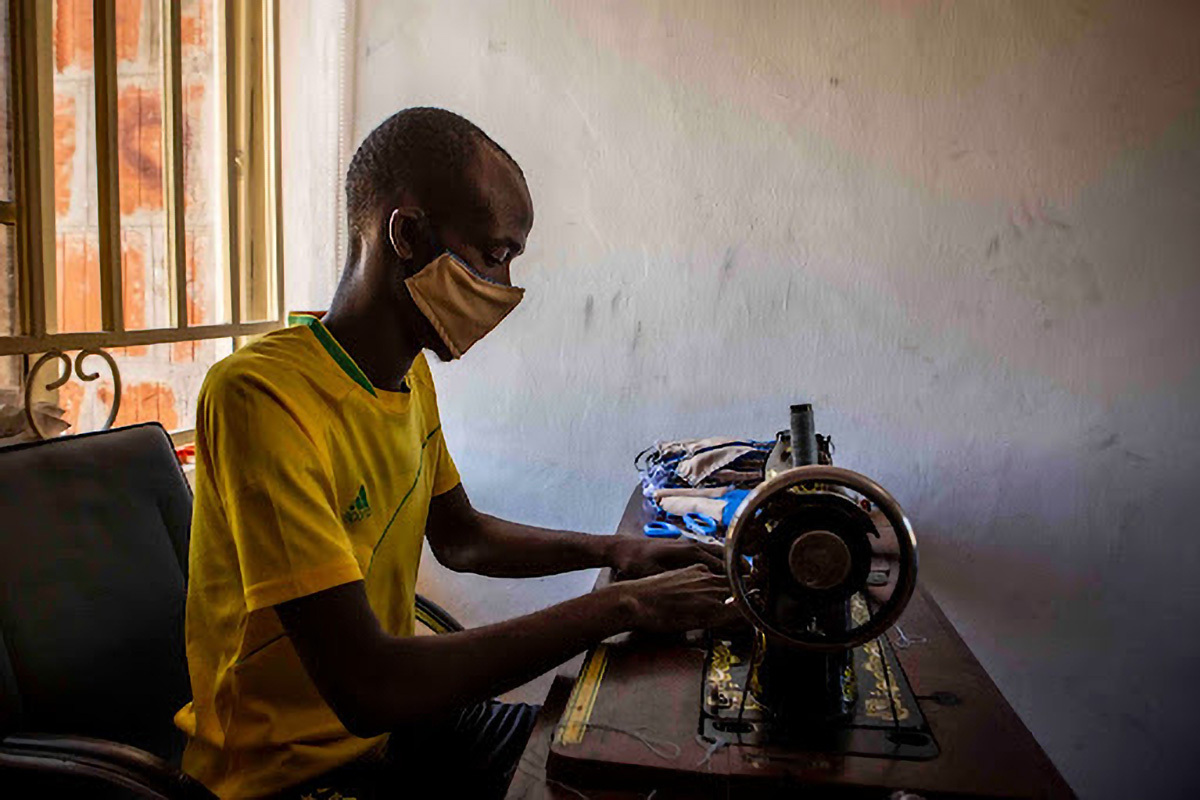
The feeling did not last. In 2020, Abba joined our UNICEF-funded project, “Supporting the Socio-Economic Reintegration of Children Associated with Armed Forces and Armed Groups including the Civilian Joint Task Force (CJTF) in North East Nigeria.” After four months of apprenticeship, he learned all the tricks of the tailoring trade.
"I no longer felt like I was left behind. It helped me make up for the lost years by doing something meaningful with my life. Without this, I don't know where I would be now."
This new beginning is not limited to Abba. "Until I was released, no one was there to support my mother and seven siblings." With the money he earns, Abba "sends the children to school, buys food, and pays the rent."
His late father, a teacher, instilled in him a love of learning. With his income, Abba was able to pay for the school's final exam registration, pursuing more dreams. "I will continue to learn; I want to become a doctor to help people get better." Back at home, he too is the teacher, showing everyone in the family how to use the sewing machine—passing on skills to mend their lives back together, one thread at a time.