“Nothing compares to my life before.”
"Boko Haram asked my uncle to join their ranks. When he refused, they killed him. My parents fled; I stayed," Abdullahi says. At 13, sensing the threat of the extremists getting closer and gunfire getting more frequent, he joined a local vigilante group. "I was afraid that if I ran away with my parents, they would find us on the way and recognize me as a member of the vigilantes."
In northeastern Nigeria, the threat hung like the sword of Damocles. In 2013, at the height of the insurgency, citizens formed a vigilante group to help government forces fight back. "Boko Haram surrounded the villages. People were afraid, sensing that attacks were imminent, so more and more joined the vigilantes."
Like many, Abdullahi's parents saw the decision of their son to join the vigilantes "a means of protection," shielding him against the sword. "I ran errands for the vigilantes, followed them on patrols with the military."
One day, when Abdullahi heard that the military patrol was heading to Maiduguri, he did not hesitate. "I knew my family had moved to one of the IDP camps there. At that point, I hadn't seen them for a year and a half." Under the protection of the army and vigilantes, he finally crossed the miles that separated him from his loved ones, overcoming the fear that had held him back.
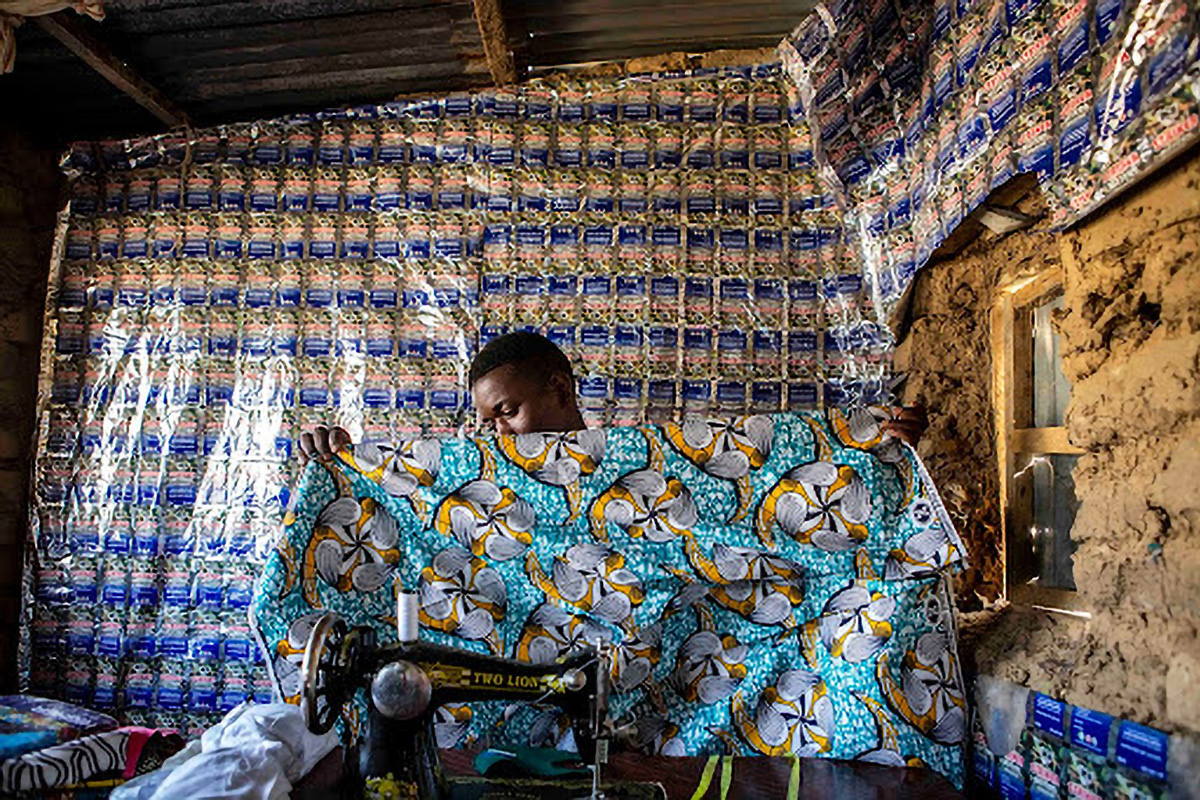
Then the camp. Clay shelters on sandy ground, and silhouettes wrapped in colorful fabrics. At its heart was the sewing workshop of Abdullahi, who swapped his vigilante uniform for that of a tailor.
Abdullahi was one of nearly 900 children released from the ranks of the vigilante group when it committed to stop recruiting children. Since 2020, our UNICEF-funded project has been helping children like Abdullahi, formerly associated with armed groups, to reintegrate socially and economically into communities.
Among the various project apprenticeship opportunities, it was the machine's hum that brought back his childhood memories and won his heart. "I had learned to use the sewing machine as a child, helping my sister make clothes."For several months, he closely followed his mentor's actions to perfect his skills. The project then provided him with the means to start his business; the rest was up to his talent.
Some sounds still evoke other memories. "After years of being with the vigilantes, I am no longer afraid when I hear explosions and gunshots." Abdulahi also attended trauma management sessions, which gave him tools to recognize trauma symptoms and coping mechanisms. "I mainly use what I learned to help those around me. For example, when we hear a bomb blast, people are often about to collapse. I then place a hand on their forehead and behind their neck to soothe them."
In the shade under the workshop's windows, older women chat, and children giggle and peek at Abdulahi, nestled between his thousand-and one- tailoring treasures. In a jumble of threads, needles, and rainbow fabrics, he has found a shelter for a new beginning. "Nothing compares to my life before. I don't feel like being a vigilante anymore."